
You step onto your deck, looking forward to relaxation. Instead, you feel like everyone on the block can see into your space. Neighbors’ windows look directly at your seating area. Passersby on the street have a clear view of your entertainment space.
This is the “fishbowl” effect, and it’s one of the most common complaints I hear from suburban homeowners. The good news is that you don’t need to enclose your entire deck to solve this problem. Strategic privacy solutions exist that block unwanted views while keeping your outdoor space feeling open and breathable.
Understanding the Fishbowl Effect
The fishbowl effect happens when your deck sits exposed to surrounding properties with little natural screening. In many suburban developments, homes are placed close together with minimal distance between properties. Decks are often built at the same height as neighboring windows. This creates a situation where neighbors can look directly into your space at eye level.
The problem isn’t just neighbors intentionally watching. It’s the constant awareness that you’re visible. It affects how comfortable you feel on your own deck. You might sit down and realize you’re in direct line of sight with a neighbor’s kitchen. You notice the teenage neighbor walking by can see you relaxing. This visibility stress makes your deck less enjoyable.
The fishbowl effect has real consequences:
- It reduces how often you use your deck
- It limits what activities you feel comfortable doing there
- It affects your sense of privacy and personal space
- It can impact your home’s resale value since buyers want private outdoor space
- It makes entertaining guests less comfortable
Many homeowners assume the only solution is a full enclosure. They imagine closing off the entire deck with walls and a roof. While enclosures work, they come with drawbacks. They’re expensive, require permits in many areas, block airflow, and change the character of your space from outdoor to something in between.
There’s a better approach using strategic privacy solutions.
The Balance Between Privacy and Airflow
Here’s what most people don’t realize: the best privacy solutions for suburban decks don’t completely block views. They create visual barriers that feel private while maintaining the open outdoor feeling that makes decks valuable in the first place.
Airflow matters more than homeowners typically think. A fully enclosed deck becomes hot and stagnant on warm days. Without air movement, mosquitoes settle in more readily. The space doesn’t feel connected to the outdoors. It becomes uncomfortable during the summer months when you want outdoor living the most.
Privacy screens handle this balance perfectly. They create blockages at strategic points that disrupt sightlines without creating solid walls. The key is understanding where views come from and blocking those specific angles rather than creating complete barriers.
Let’s explain the difference between strategic screens and full enclosures:
Strategic Privacy Screens
These are partial barriers placed at specific locations. They block sightlines from problem areas without enclosing the entire deck. Air circulates freely. You still feel like you’re outside. They cost much less than full enclosures and rarely require permits.
Full Enclosures
These completely surround the deck with walls, often including a roof. They eliminate all views from outside and inside. They require permits in most areas. They’re expensive and permanent. They eliminate the outdoor feeling.
For most suburban deck situations, strategic screens solve the fishbowl problem while maintaining everything that makes your deck enjoyable.
Identifying Problem Sightlines
Before installing any privacy solution, identify exactly where views come from. Walk around your property at different times of day. Look at your deck from neighboring properties, if possible. Note which windows have a clear view of your sitting areas. Mark where you can see pedestrians looking at your space. Expert deck builders in Harleysville and the surrounding areas can help you identify these sightlines if the need arises.
Pay attention to these common problem areas:
- Directly across the property line where neighbors’ decks face yours
- Upper-story windows in neighboring homes that look down at your space
- Kitchen or dining room windows where people naturally gather
- Street-level views if your deck is visible from the road
- Angles from properties at the corner of your lot
You’ll typically find only 2 to 3 specific problem sightlines rather than views from all directions. This is important because it means you don’t need to block everything. You need to block specific problem angles.
Blocking only problem sightlines uses fewer materials and costs less than full enclosure. It also maintains openness on sides where privacy isn’t an issue.
Privacy Screen Options and Placement Strategies
Several types of privacy screens work well for suburban decks. Each has advantages depending on your situation.
Lattice Panels
Lattice creates decorative diagonal patterns while still providing privacy. It’s affordable, comes in many styles, and allows light and some air to pass through. Place lattice panels in front of problem sightlines. The diagonal pattern is less obvious than a solid wall, making your deck feel less enclosed.
Install lattice on a frame at the edge of your deck where it blocks sightlines from neighboring windows. For street views, angle lattice panels to block views from passing cars and pedestrians while still allowing people sitting on your deck to see outward.
Slatted Panels
Horizontal or vertical slats create visual barriers while offering excellent airflow. They’re modern looking and work well with contemporary homes. The gaps between slats allow breezes to move through while blocking direct views.
Orient slats strategically based on where views come from. Vertical slats block horizontal views effectively. Horizontal slats work better for blocking downward views from upper-story windows. You can mix orientations to solve multiple problem angles.
Living Screens
Climbing vines or tall plants grown on a frame create privacy while softening the appearance. Ivy, clematis, or other climbing plants take 1 to 2 growing seasons to fully cover the frame, but look natural and attractive once established.
Living screens work best when you’re not in a rush. They require some maintenance to keep plants healthy. However, they improve over time and integrate naturally with landscaping.
Composite Screening
Modern composite screening looks sleek and requires minimal maintenance. It won’t rot or need staining like wood. These panels come in various designs from solid to decorative patterns. They’re durable and work well for contemporary homes.
Composite screening costs more than wood or lattice but lasts longer without maintenance.
Bamboo Screening
Natural bamboo creates an Asian garden aesthetic. It’s affordable and installs quickly. Bamboo screening has density that provides strong privacy while still allowing some airflow. It does require occasional maintenance as bamboo weathers naturally.
Strategic Placement on Your Deck
The most effective approach combines multiple screen types in specific locations. Here’s how to think about placement:
Side Privacy Screens
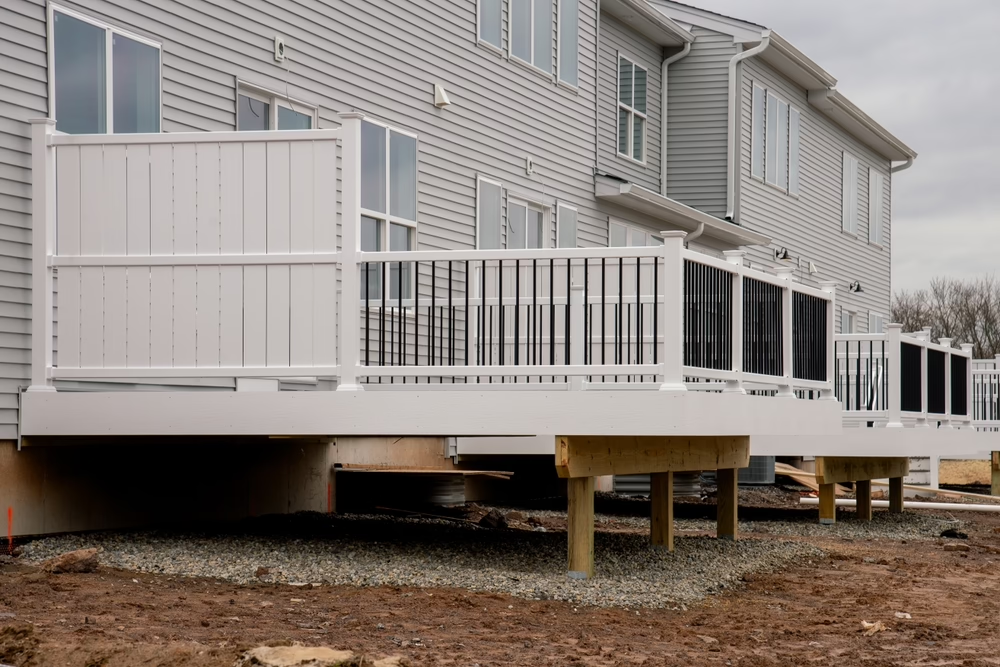
Place screens along the sides of your deck where sightlines run between properties. These don’t need to be full height. Often, screening from the deck railing level to about 6 feet tall blocks most neighboring views while not making your space feel like a fortress.
Position side screens on a frame slightly forward of the deck edge. This creates a private sitting area while leaving the outer deck edge open. The feeling is more “room within a room” than enclosed space.
Front Blocking Screens
If your deck faces the street or a neighboring property directly, a front screen blocks those views. Install this where it’s most needed. If only one section of the deck faces the problem sightline, screen just that section.
Angle a front screen at 45 degrees rather than perpendicular to the deck. This prevents the space from feeling like a boxed-in room. It maintains sight lines along the deck while blocking views from problem angles.
Staggered Screen Placement
Rather than one continuous wall, use staggered panels. Staggered screens block sightlines at certain angles while allowing views in other directions. This creates privacy without a closed-in feeling. Air flows around and between panels easily.
Stagger screens at different heights, too. Lower panels might be solid, while upper areas use lattice or slats. This breaks up the visual mass and maintains some openness overhead.
Elevated Decks Special Consideration
If your deck is elevated above ground level, you have an advantage. The height naturally provides some privacy from ground-level sightlines. You mainly need to block sightlines from upper-story windows in neighboring homes and properties across the street.
For elevated decks, side and back screening at the upper portion of the railing height often solves the problem. You don’t need full-height screens.
Material Selection for Your Situation
Choosing between materials depends on your climate, maintenance tolerance, aesthetic preference, and budget.
Wood screening is affordable and classic. It requires staining or painting every 2 to 3 years in most climates. Wood weathers naturally and blends with traditional homes. It’s ideal if you like natural materials and don’t mind maintenance.
Vinyl or composite materials don’t require painting. They last 15+ years with minimal upkeep. They work well for contemporary homes and for people who want low maintenance. Initial cost is higher, but you save on maintenance over time.
Lattice and slatted panels allow the most airflow and light. Choose these if feeling enclosed is a major concern. They provide moderate privacy improvement compared to solid screens.
Solid screens offer maximum privacy but require careful design so they don’t make the space feel claustrophobic. Use solid screens only where privacy is critical and pair them with more open screening elsewhere.
In hot climates where you want to block sun while maintaining privacy, lattice or slats work best. In cooler climates, solid screening doesn’t cause overheating problems.
Handling Wind and Weather
Privacy screens change how wind moves across your deck. Solid screens create wind shadows and turbulence. Slatted or lattice screens allow wind to flow through more smoothly.
In windy areas, choose screens with gaps and openings rather than solid panels. Wind pushes less on screens with openings, so they require less robust installation.
Ensure any screen installation can handle the wind load in your area. Proper bracketing and secure posts matter more than the type of screening material. Have screens professionally designed if you live in a high-wind region.
In snow climates, solid screens can collect heavy snow loads. Slats and lattice shed snow more easily. This is worth considering if you get significant snow.
Lighting Considerations
Privacy screens affect how light reaches your deck. This can be positive or negative depending on your situation.
Solid screens block direct sun, which keeps your deck cooler on hot days. Slatted screens filter light, creating patterns. Lattice allows more light through while still reducing glare.
If you want shade in summer but sun in winter, consider deciduous vines on a living screen. They provide leaf coverage when you need it and open up when you want sun warmth.
Consider how screening affects morning and evening light. Screens on the west side block harsh afternoon sun. Screens on the east side eliminate intense morning light if that bothers you.
Combining Screens with Other Privacy Solutions
Screens work best as part of a layered privacy approach.
Plantings and Landscaping
Trees and shrubs provide natural screening around the deck perimeter. They blend with your yard and improve gradually. Plant tall trees and shrubs on problem sightline edges. This creates a living privacy buffer that screens work to supplement.
Deck Furniture Arrangement
How you arrange furniture affects privacy. Position seating areas where screens block sightlines. Arrange furniture so people sit facing away from neighbors rather than toward them. This simple approach costs nothing but improves the feeling of privacy.
Strategic Shade Structures
Pergolas and shade structures on your deck can include climbing vines or panels that provide privacy while shading the space. These serve dual purposes: privacy and sun control.
Outdoor Curtains and Fabric
Fabric panels that hang from overhead structure add privacy and can be removed seasonally. They’re temporary and flexible compared to permanent screens.
Creating Your Private Oasis
With the help of professional deck contractors in Northeast Philadelphia, the fishbowl effect is solvable without expensive full enclosures. Strategic privacy screens placed at problem sightlines create the feeling of a private oasis while maintaining the open, outdoor character of your deck.
Start by identifying exactly where views come from. Then select screening materials that match your home’s style and your climate. Place screens strategically rather than everywhere.
You’ll find that blocking just 2 to 3 specific sightlines dramatically improves how your space feels. Your deck becomes a place you actually want to spend time. The investment in privacy screens pays dividends through increased enjoyment and use.
Your suburban deck can feel like your personal retreat. You just need to think strategically about which views matter and block those rather than enclosing everything. Contact Expert General Contracting today to help you put your outdoor concerns in the rear-view mirror. That’s how you escape the fishbowl effect and create the private outdoor space you’ve been wanting.