
Setting up outdoor speakers seems simple. You buy good speakers, turn up the volume, and enjoy your music. But if you’ve ever hosted a backyard party or tried to create the perfect patio ambiance, you know it’s not that easy.
The truth is, speaker placement makes a bigger difference than how loud your speakers can go. Even the most expensive outdoor speakers will sound terrible if you put them in the wrong spots. Let’s explore why location beats volume every time.
How Sound Behaves Outdoors
Sound acts differently outside than it does in your living room. Indoor spaces have walls, ceilings, and furniture that reflect sound waves back to your ears. This creates natural amplification and helps fill the room with music.
Outdoors, sound has nowhere to bounce. It travels away from the speaker in all directions and keeps going until it fades out. This is why outdoor concerts need massive speaker systems, even though the same band would sound great in a small club.
Three main factors affect outdoor sound:
- Open-air dissipation: Sound waves spread out and lose energy quickly without walls to contain them
- Wind interference: Even a light breeze can push sound away from your listening area
- Ambient noise: Birds, traffic, neighbors, and rustling leaves compete with your music
Understanding these basics helps you work with outdoor acoustics instead of fighting against them.
The Volume Trap
Many people think louder is better for outdoor audio. They crank up the volume to combat the open space. This creates several problems. For homeowners looking to combine quality audio with outdoor living, consulting deck builders in Ambler can help create a deck layout that optimizes speaker placement and enhances the listening experience.
Loud speakers often sound worse when pushed to their maximum output, introducing distortion. Bass becomes muddy, highs grow harsh, and the overall clarity suffers, turning music that’s crisp at moderate levels into noise at high volumes. Excessive volume can also annoy neighbors, and most areas have local noise ordinances that, if violated, may result in fines or visits from authorities.
Additionally, very loud audio leads to listening fatigue, as ears tire from processing too much sound, causing people to stop enjoying the music. Smart placement lets you achieve better sound coverage at lower, more pleasant volumes. This approach improves audio quality while keeping everyone happy.
Key Principles of Speaker Placement
Height Matters
Speaker height dramatically affects sound distribution. Placing speakers at ear level when people are seated creates the most natural listening experience. For standing areas like near a grill or outdoor kitchen, position speakers slightly higher.
Ground-level speakers waste energy. Much of the sound hits the ground or gets absorbed by grass and landscaping. Elevating speakers by just a few feet makes them significantly more effective.
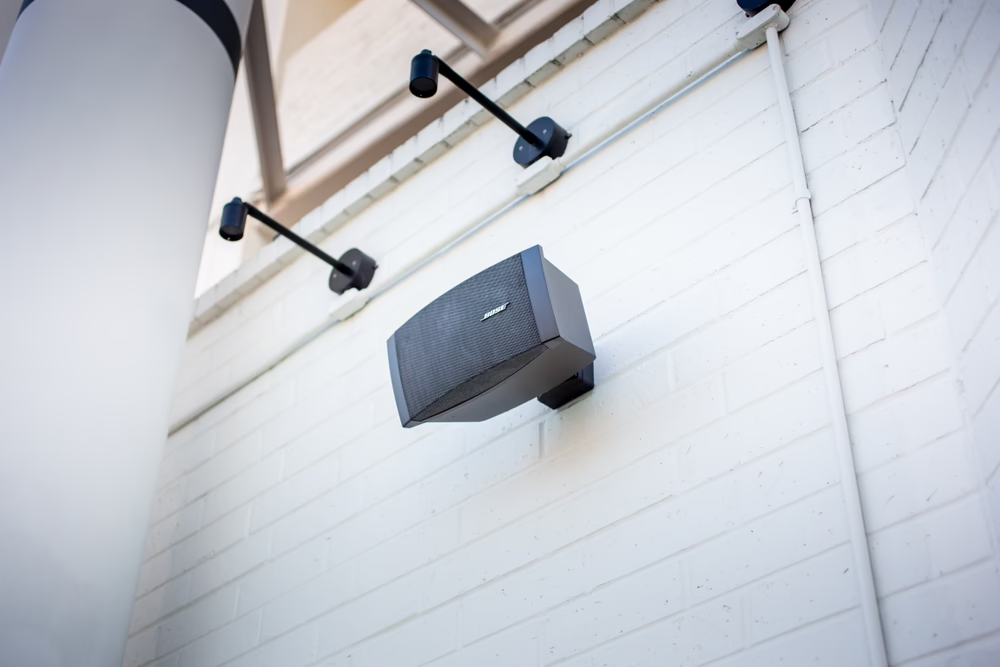
Wall-mounted speakers work well for patios and covered areas. Mounting them 7 to 8 feet high aims sound down toward the listening area while taking advantage of any nearby surfaces for reflection.
Distance from Walls and Corners
Outdoor structures affect sound in useful ways. Placing speakers near walls or under eaves creates subtle reflections that boost volume naturally. A speaker positioned one foot from a wall sounds noticeably louder than the same speaker in the middle of an open yard.
Corners offer even more reinforcement. The intersection of two walls or a wall and ceiling amplifies bass frequencies. This trick helps smaller speakers produce fuller sound without cranking the volume.
However, being too close can cause problems. Speakers pressed directly against walls may sound boomy or unbalanced. Leave 6 to 12 inches of space for the best results.
Coverage Areas and Speaker Spacing
Think about your outdoor space in zones. Where will people actually spend time? Focus your speaker placement on these areas rather than trying to fill every square foot of your property.
For rectangular patios or decks, two speakers work better than one. Place them at opposite corners, angled slightly inward. This creates overlapping coverage that sounds more natural than a single central speaker.
Larger yards may need multiple pairs. Space speakers 15 to 25 feet apart for good coverage without gaps. Each speaker should reach about 12 to 15 feet in its primary direction.
Avoid pointing all speakers toward a single spot. This creates a loud central zone with dead spots everywhere else. Distribute speakers around the perimeter of your gathering area instead.
Angle and Direction
Speaker angle controls where sound goes. Many outdoor speakers have swivel mounts that let you aim them precisely. Use this feature.
Pointing speakers straight out sends sound into empty space. Angle them toward seating areas, the center of the patio, or wherever guests will gather. Even a 15-degree adjustment makes a noticeable difference.
For large areas, creating crossing sound paths works well. Position speakers so their coverage areas overlap in the middle. This technique fills the space more evenly than parallel speakers.
Downward-angled speakers prevent sound from traveling too far. If you need to keep music in your yard without bothering neighbors, tilting speakers down focuses the audio where you want it.
Practical Placement Strategies for Common Outdoor Spaces
Small Patios and Balconies
A pair of speakers mounted on opposite walls at 6 to 7 feet high handles most small outdoor spaces. Angle them slightly downward and inward. This setup creates even coverage without overwhelming the area.
If mounting isn’t possible, place speakers on shelves or stands in corners. The wall support helps these smaller spaces fill with sound more easily than open yards.
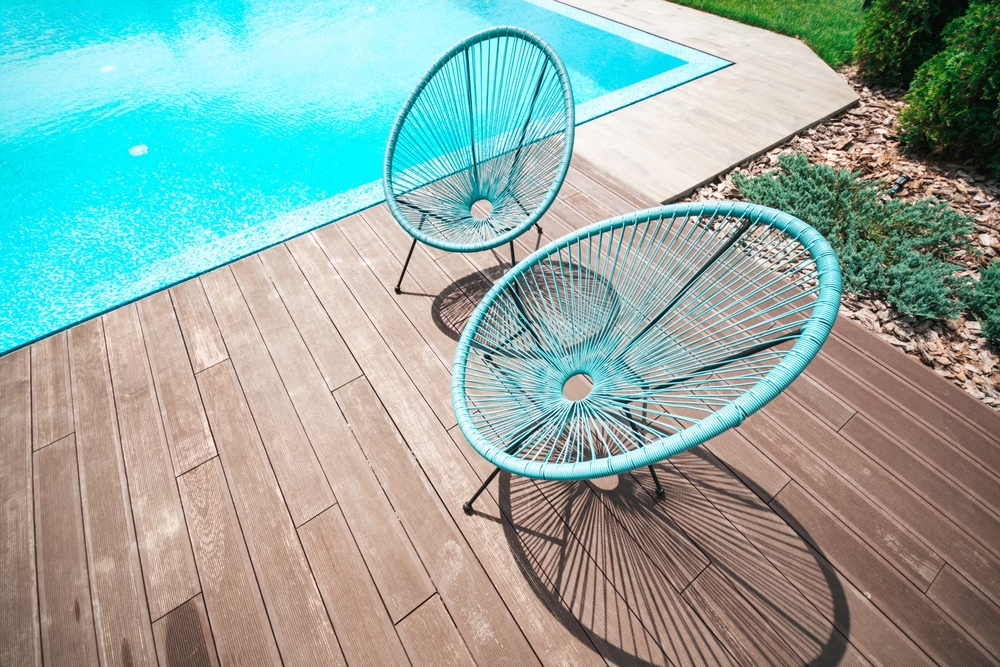
Pool Areas
Never place speakers where they might fall into water. Mount them on fences, walls, or structures at least 3 feet from the pool edge. Check that speakers are rated for moisture exposure.
Position speakers around the pool perimeter rather than clustering them in one spot. This lets swimmers enjoy music throughout the pool without creating excessively loud zones.
Aim speakers across the pool rather than toward neighboring properties. Water reflects sound, so use the pool as part of your acoustic design.
Large Yards and Gardens
Big spaces need multiple speakers working together. Create audio zones for different areas like the patio, lawn, and garden paths. Each zone can have independent volume control.
Use landscape features strategically. Speakers near hedges, fences, or garden walls perform better than those in wide open areas. The structures provide acoustic support.
For parties and events, focus 70% of your speakers on the main gathering zone. Use the remaining 30% to provide background coverage in secondary areas. This prevents dead spots while maintaining a clear audio focus.
Covered Outdoor Kitchens and Dining Areas
Roofed structures offer the best outdoor acoustics. The ceiling reflects sound back down, much like an indoor room. Take advantage of this by mounting speakers on or near the ceiling structure.
Two speakers in opposite corners work perfectly for most covered spaces. This placement mirrors indoor stereo setups while accounting for the open sides of the structure.
Keep speakers away from the cooking area itself. Heat and grease can damage speakers over time. Mount them 6 to 8 feet from grills and stoves.
Testing and Adjusting Your Setup
Good placement requires experimentation. Start with the principles above, then fine-tune based on your specific space.
Play familiar music at a moderate volume and walk around your outdoor area. Note where the sound is too loud, too quiet, or unclear. Mark these spots mentally or physically.
Make small adjustments to speaker angles first. A 10-degree change can fix problem areas without moving mounting hardware. Swivel mounts make this process simple.
If angles don’t solve the issue, adjust the height next. Raising or lowering speakers by 1 to 2 feet changes coverage patterns significantly.
As a last resort, relocate speakers. Sometimes the initial placement just doesn’t work for your specific space. Learning this early saves frustration later.
Test at different times of day. Evening gatherings have different ambient noise than afternoon barbecues. What works for dinner parties might need adjustment for late-night entertaining.
Weather and Environmental Considerations
Outdoor speakers face rain, sun, humidity, and temperature swings. Placement affects how well they survive these conditions. For homeowners planning a durable outdoor setup, hiring a deck contractor in Lansdale, PA, and the surrounding areas can help position speakers and decking to withstand weather and environmental challenges year-round.
Avoid mounting speakers where they receive direct rainfall. Even weather-resistant models last longer with some protection. Under eaves, beneath overhangs, or on covered patios offer the best longevity.
Direct sunlight fades and cracks speaker components over time. South and west-facing locations get the most intense sun exposure. If these spots are necessary, choose speakers rated for full sun exposure.
Consider seasonal changes. That perfect summer placement might be too close to falling leaves in autumn or ice buildup in winter. Think about year-round conditions when making permanent installations.
Common Mistakes to Avoid
- Buying huge speakers for small spaces: Oversized speakers in compact areas create muddy, unbalanced sound
- Ignoring stereo separation: Placing stereo speakers too close together eliminates the benefits of stereo sound
- Forgetting about seating areas: Position speakers based on where people sit, not just where they look good
- Mounting everything at the same height: Varied heights often provide better coverage than uniform placement
- Overlooking power and wiring routes: Great acoustic placement means nothing if you can’t run power to that location
The Right Volume Level
With proper placement handled, what volume should you use? A good rule is the conversation level. People should be able to talk normally without shouting over the music.
Background music for casual gatherings should stay around 60 to 70 decibels. This is roughly the volume of normal conversation. For parties and events, 70 to 80 decibels works well. Above 85 decibels, you risk hearing damage and angry neighbors.
Your smartphone can measure decibel levels with free apps. Take readings from different spots in your outdoor space to maintain even coverage.
Mastering Outdoor Speaker Placement for the Best Sound
Speaker placement transforms outdoor audio from frustrating to fantastic. By understanding how sound behaves outside and applying smart positioning strategies, you create better listening experiences at lower volumes.
Start with the fundamentals: appropriate height, strategic use of structures, proper spacing, and careful angling. Test your setup and make adjustments based on real-world results. Remember that every outdoor space has unique acoustic properties.
The next time you set up outdoor speakers, resist the urge to simply turn up the volume. Instead, invest time in thoughtful placement. Your ears, your neighbors, and your guests will thank you. Great outdoor audio isn’t about power, it’s about positioning. For expert advice and professional installation, contact Expert General Contracting today to optimize your outdoor audio setup.