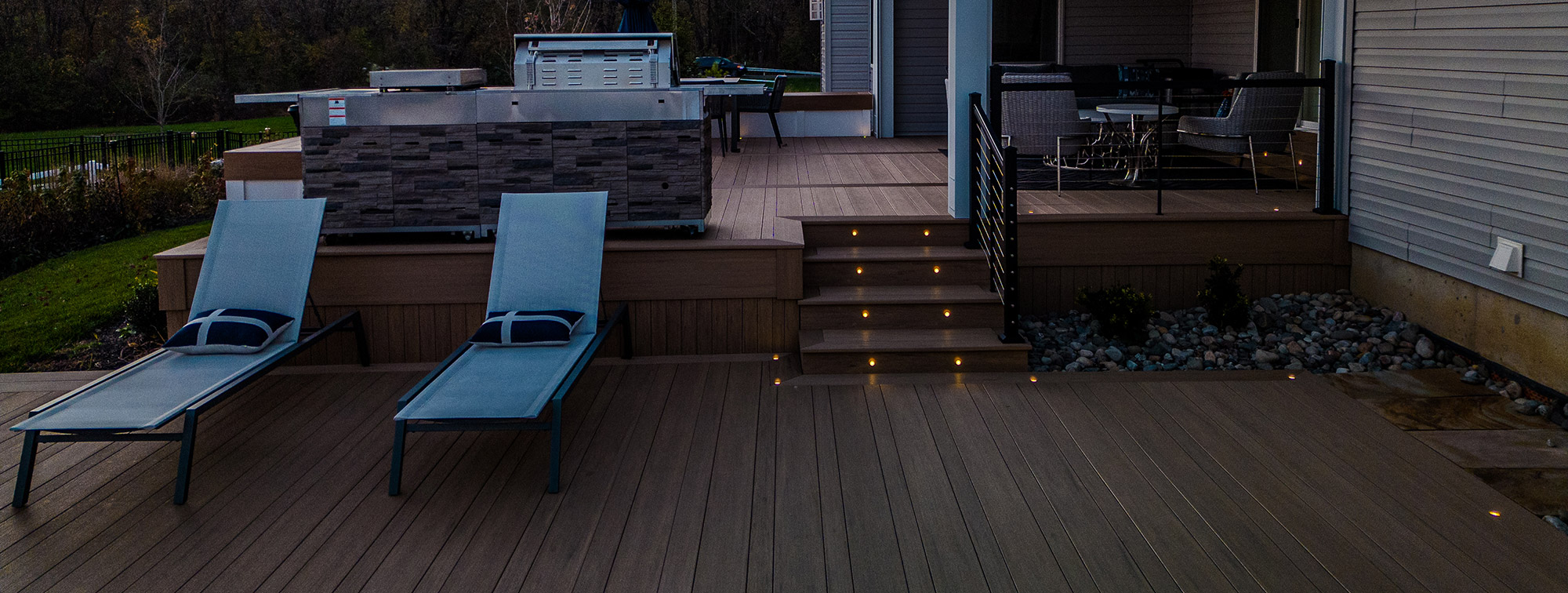
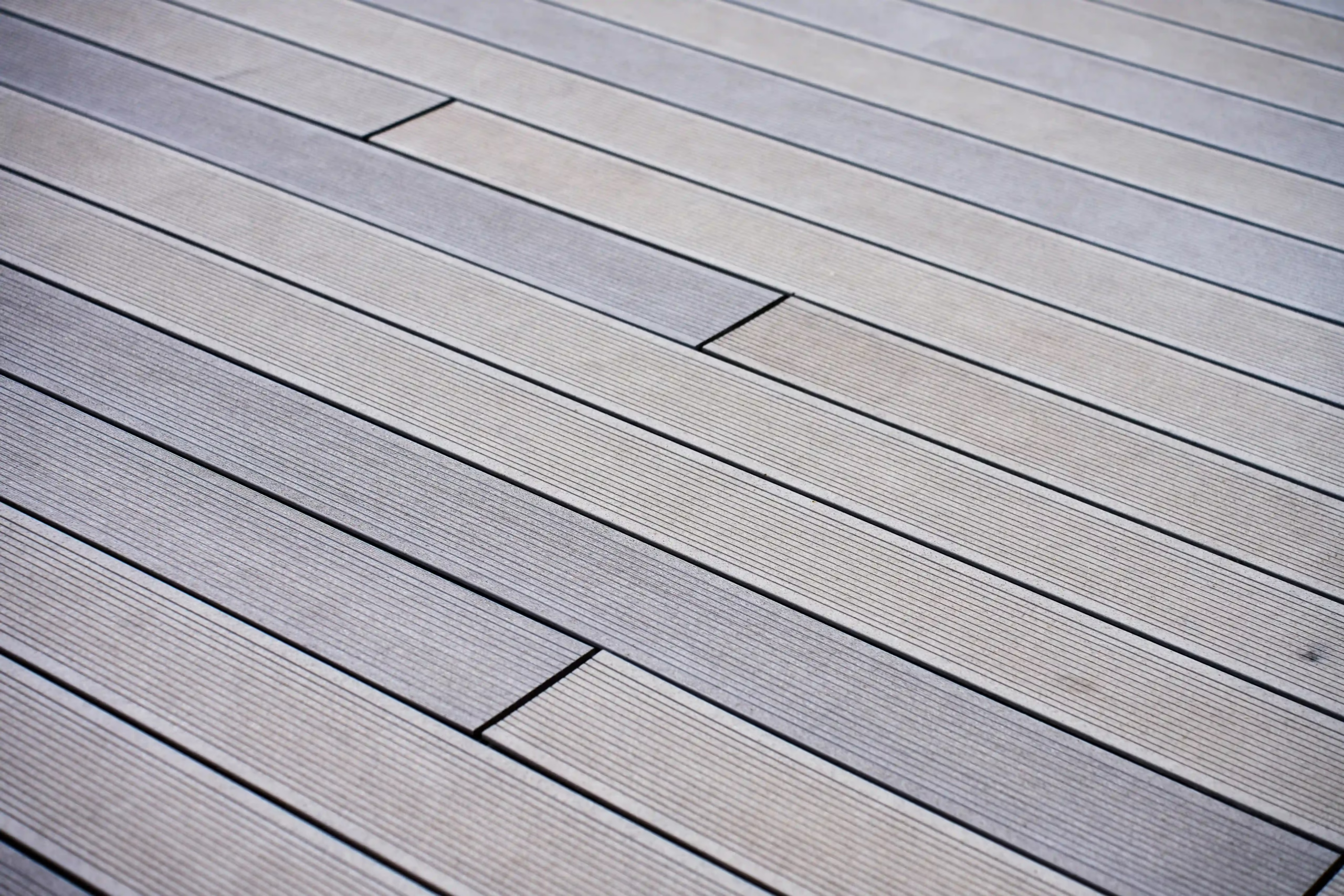

A dark espresso composite board on an unshaded rooftop can register 150 to 165 degrees Fahrenheit on an infrared thermometer while the air temperature sits at 90. Roof deck installation in Philadelphia places boards on the hottest, least shaded surface of the entire house, which is exactly why colorway and core technology matter more up there than they do on a shaded backyard build. The good news is that the temperature gap between the hottest and coolest boards in the same product line often reaches 30 degrees or more.
Heat retention comes down to three variables that homeowners can actually control: the pigment in the cap layer, the chemistry of the cap itself, and what sits underneath it in the core. Understanding how those three interact prevents the common regret of a beautiful dark deck that nobody can stand on between noon and four.
Why Rooftop Boards Run Hotter Than Ground-Level Decks
A rooftop surface receives direct solar radiation for most of the day with no tree canopy, no neighboring structures, and very little evaporative cooling from surrounding soil or lawn. The EPA notes that conventional dark roofing surfaces can reach 150 degrees Fahrenheit or more on a sunny summer afternoon, and composite decking installed over that roof behaves similarly.
Philadelphia averages roughly 30 days above 90 degrees each summer, with rowhome roof decks in Fishtown (19125), Northern Liberties, and Graduate Hospital catching reflected heat off neighboring brick and membrane roofing. Ground-level decks in Doylestown or Yardley often sit beside mature oaks and maples that cut peak surface temperatures substantially. The same board, same color, same manufacturer, can differ by 20 degrees depending on where it lands.
Pigment and Solar Reflectance Drive Most of the Difference
Dark pigments absorb a larger share of visible and near-infrared radiation and convert it to heat, while light pigments reflect it. That reflectance value, sometimes expressed as albedo, explains the majority of the spread between colorways in a single product family.
Typical surface temperatures measured in full afternoon sun with an air temperature near 90 degrees fall in these ranges:
Black, espresso, charcoal
- Typical Surface Temp: 150°F to 165°F
- Barefoot Comfort: Painful within seconds
Dark brown, walnut, mahogany
- Typical Surface Temp: 142°F to 155°F
- Barefoot Comfort: Shoes strongly recommended
Mid gray, pecan, saddle
- Typical Surface Temp: 132°F to 145°F
- Barefoot Comfort: Tolerable briefly
Light gray, driftwood, weathered wood
- Typical Surface Temp: 124°F to 136°F
- Barefoot Comfort: Manageable for most adults
Sand, light tan, whitewash
- Typical Surface Temp: 118°F to 132°F
- Barefoot Comfort: Comfortable in most conditions
Those numbers carry a real safety implication. Skin contact with a surface at 140 degrees produces a burn in roughly five seconds, and the risk climbs sharply for young children, elderly guests, and dogs whose paw pads sit directly on the boards. The National Weather Service heat safety guidance is worth reviewing before planning long afternoon gatherings on a south-facing rooftop.
What the Cap Layer Contributes Beyond Color
Nearly every quality composite board sold today is capped, meaning a polymer shell is co-extruded around the core to block moisture, stains, and fading. The chemistry of that shell affects heat behavior in two ways that are easy to overlook
.
- Polyethylene caps are the most common and the least expensive, and they tend to hold heat slightly longer than other cap chemistries because of their density and composition.
- PVC caps conduct heat somewhat differently and generally shed accumulated heat faster once the sun moves off the surface, which matters for evening use.
- Infrared-reflective pigments, borrowed from cool-roofing technology, allow a dark-looking cap to reflect a portion of the near-infrared spectrum that the eye cannot see. Several premium lines advertise surface temperature reductions in the range of 15 to 30 degrees compared with standard dark boards of similar appearance.
- Surface texture and gloss play a smaller role, though heavily embossed matte finishes scatter light and typically test a few degrees cooler than smooth, semi-gloss surfaces.
If a dark aesthetic is non-negotiable, an IR-reflective capped board is the single most effective compromise available in 2026.
Core Formulations: Wood Flour, Mineral, and Cellular PVC
The core determines thermal mass, which governs not how hot a board gets at its peak but how long it stays hot after the sun passes. Three formulations dominate the market.
Wood-plastic composite cores blend roughly 50 to 60 percent reclaimed wood flour with polyethylene. They are dense and heavy, typically 2.5 to 3.5 pounds per linear foot, and that mass stores considerable heat. A dark wood-plastic board can remain uncomfortable for 60 to 90 minutes after falling into shade.
Cellular PVC cores contain no organic filler at all. The closed-cell foam structure holds air, reduces density by 25 to 40 percent compared with wood-plastic boards, and carries less thermal mass as a result. Full-PVC decking still gets hot in direct sun, but it typically peaks 5 to 15 degrees lower in matched colorways and cools noticeably faster. That faster recovery is a meaningful advantage on a rooftop used mainly for dinner and evening entertaining.
Mineral-based composite cores swap wood flour for inorganic mineral fill bonded with polymer. These boards resist moisture absorption completely, carry long structural warranties, and generally test cooler than traditional wood-plastic composites in the same shade family.
Choosing a Cooler Colorway Without Giving Up the Look
Homeowners rarely want a white deck, and nobody should feel limited to pale driftwood gray. A few practical approaches keep surface temperatures reasonable while preserving design intent:
- Select a mid-tone board with warm variegation rather than a solid dark color, since multi-tonal streaking reads as rich without the full absorption penalty.
- Use dark boards as a picture-frame border or inlay only, keeping the main field in a lighter tone where feet actually land.
- Request physical samples and test them on site, laid out on the roof or patio at 2 p.m. in July, measured with an inexpensive infrared thermometer.
- Prioritize IR-reflective cap technology if the design calls for charcoal or espresso tones.
- Pair the decking with light-colored railing and a shade structure, since a pergola or sail cuts direct gain on the covered portion by a wide margin.
Budget plays into this as well. Standard capped composite typically runs $9 to $16 per square foot in material, while cellular PVC and mineral-based lines land closer to $13 to $22. Complete roof deck projects in the city generally fall between $55 and $110 per square foot installed, depending on structural reinforcement, access, and railing selection. Ground-level projects handled by deck builders in Bucks County, PA, including work in Newtown, Langhorne, and Doylestown (18901), usually price lower per square foot because framing and material delivery are far simpler.
Structural Details That Also Affect Comfort
Composite and PVC boards expand and contract with temperature, and a deck that reaches 160 degrees moves more than one that peaks at 125. Proper end-gap spacing, correct fastener selection, and joist spacing at 12 to 16 inches on center keep dimensional movement from showing up as buckling or gapping three summers later.
On rooftop builds, pedestal systems or sleeper frames over the membrane also create an air gap beneath the boards. That gap allows convective airflow, which helps the underside release heat and protects the roofing assembly below from trapped thermal load.
Frequently Asked Questions
How Much Cooler Is a Light Composite Board Than a Dark One?
Expect a 20 to 35 degree Fahrenheit difference between the lightest and darkest colorways in the same product line under identical sun exposure. On a 90-degree afternoon, that is often the difference between a surface at 128 degrees and one at 158 degrees.
Does PVC Decking Stay Cooler Than Capped Composite?
Full-PVC boards typically peak 5 to 15 degrees cooler than wood-plastic composites of a matching color and cool down significantly faster once shaded. The lower density and absence of wood flour reduce thermal mass, so the board stores less heat through the afternoon.
Can Anything Be Done About an Existing Dark Deck?
Outdoor rugs rated for composite, a retractable awning, or a pergola can drop usable surface temperature by 30 to 50 degrees in the covered area. Briefly hosing the deck also provides short-term relief through evaporative cooling, though the effect fades within 10 to 20 minutes in full sun.
Do Cooler Boards Fade or Wear Differently?
Lighter colorways generally show less visible fade over a 10-year period because there is less pigment contrast to lose, though they can reveal dirt and pollen more readily. Most capped products carry 25 to 50 year fade and stain warranties regardless of shade.
Talk With Our Team About Cooler Board Options
Expert General Contracting walks homeowners through sample comparisons, core technologies, and real temperature expectations before a single joist goes in. Contact us to review colorways and get a project estimate for your rooftop or backyard build.